Interoperability in the Context of Urban Digital Twins
DeltaTwin® aims to empower its users to organize, process, and publish datasets in a wide variety of formats, thereby fueling the ecosystem of DestinE services and applications.
In the specific domain of Urban Digital Twins, this data-centric mission becomes critical. Cities are increasingly instrumented with dense networks of sensors, generating real-time data streams that describe traffic flows, energy consumption, water and air quality, public space usage, and much more.
Unlocking the full value of this cross-sector data requires integrating datasets that:
- originate from heterogeneous technical formats,
- are produced by multiple organizations,
- and are often managed across national and administrative borders.
For example, within the European Open Data ecosystem, DeltaTwin® users may need to combine:
- 🇫🇷 French cadastre data (GeoJSON, ShapeFile, MBTiles),
- 🇱🇹 Lithuania Air quality data (CSV, JSON),
- 🇧🇪 Liège Vélocité bike data (XML),
- 🇩🇪 Hamburg IoT data streams (MQTT, WebSockets),
- and Earth Observation datasets, such as Sentinel-2 (GeoTIFF) and ERA5 (GRIB, NetCDF, Zarr).
DeltaTwin® deliberately allows users to publish data in any format and to adopt their own internal naming conventions and semantics. While this flexibility is essential, it also introduces a major challenge in a European collaborative context: valuable datasets risk remaining siloed and difficult to interpret by external systems or other digital twin initiatives.
Minimum Interoperability Mechanisms (MIMs)
To avoid fragmentation and to ensure that data can be reused beyond its original context, DeltaTwin® encourages users to adopt shared interoperability standards. These standards go beyond file formats and focus on harmonizing semantics, vocabularies, and interfaces.
A key reference framework in this regard is the OASC Minimum Interoperability Mechanisms (MIMs) . In short, MIMs define the minimal set of rules and standards that ensure smart city data can be shared and understood across platforms.
The minimal interoperability mechanisms (MIMs) Plus enable a minimal but sufficient level of interoperability for data, systems, and services specifically in the context of smart city solutions.
Source: MIMs Plus version 8.2 (June 30, 2025)
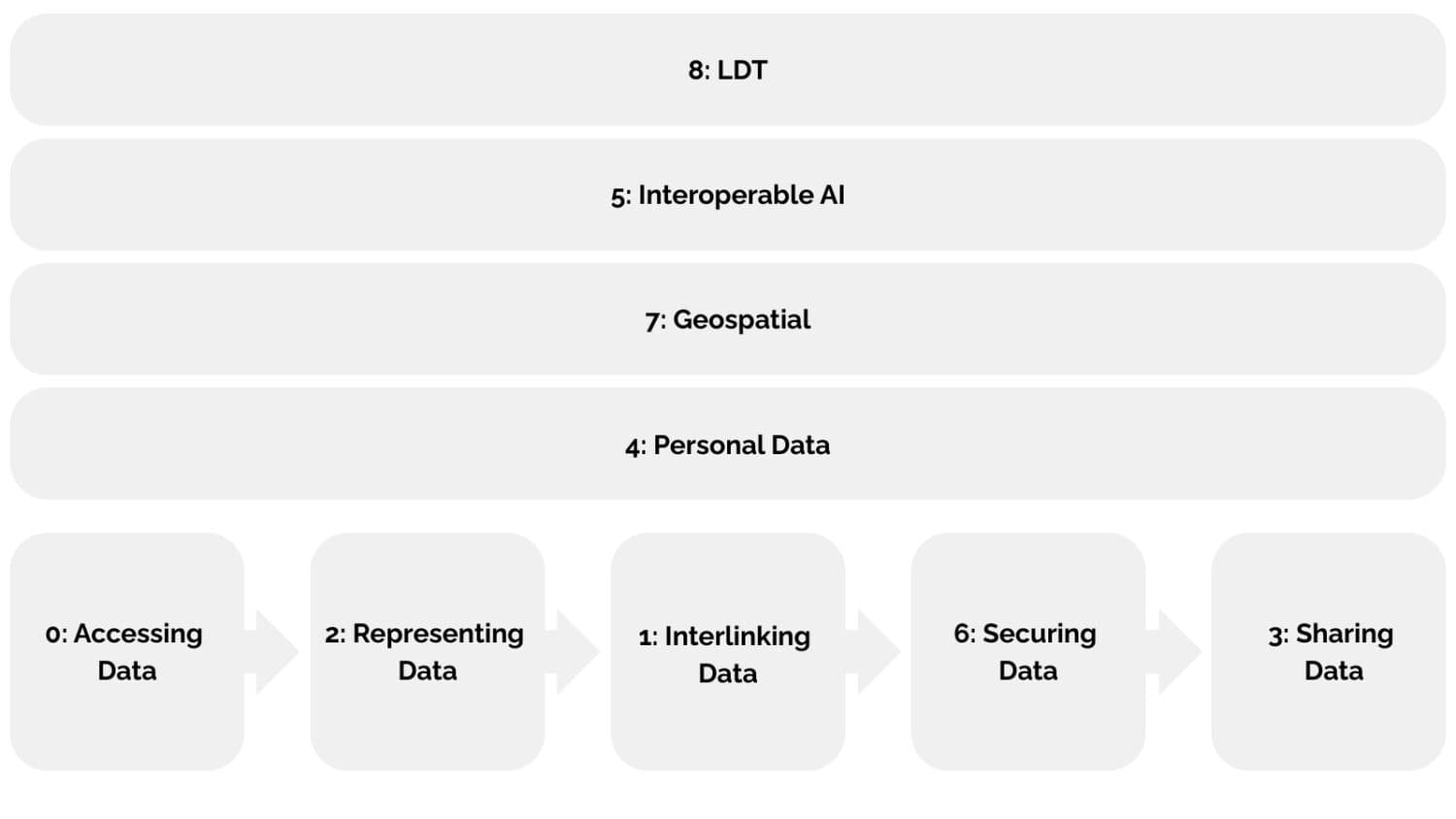
DeltaTwin® Interoperability Focuses
As a first step, DeltaTwin® focuses on strengthening interoperability across three key MIMs dimensions :
-
MIM1 - Interlinking Data,
Enabling consistent linking between user resources and generated artifacts. -
MIM2 - Representing Data,
Harmonizing the representation of metadata for resources and artifacts using shared data models and vocabularies. -
MIM7 - Geospatial Data,
Supporting the ingestion and publication of geospatial and sensor data.
These mechanisms provide a pragmatic foundation for ensuring that data produced within DeltaTwin® workflows can be understood, exchanged, and reused across platforms, cities, and countries—while preserving the flexibility required by advanced urban digital twin use cases.